Climate change and environmental damage are big issues in Australia. We're seeing a big change towards eco-friendly housing. These homes are changing how we live.
We're entering a new era of living sustainably. We need homes that are good for the environment and fit our climate. Modular and eco-friendly homes are key, with benefits like less harm to the planet and saving money.
Australia is facing the harsh effects of climate change, making sustainable housing more urgent than ever. The country's climate, with hot summers and unpredictable weather, makes old housing designs less effective. This calls for new, eco-friendly solutions.
The building sector in Australia has a big impact on the environment. Old construction ways use a lot of resources and create a lot of waste. It's said that building activities are a big source of greenhouse gases in Australia.
The sector also depends on non-renewable energy and unsustainable materials. This makes its environmental impact worse.
Key environmental challenges include cutting down carbon emissions, reducing waste, and making buildings more energy-efficient. The industry needs new, green ways to lessen its harm to the planet.
Traditional houses in Australia often ignore the country's tough climate. This leads to high energy bills and homes that can't handle extreme weather. For example, poorly insulated homes get too hot in summer, needing lots of air conditioning.
Modular housing is becoming a better choice for the environment. It's more eco-friendly, with less waste, better energy use, and room for green energy.
Eco-friendly prefab homes are a beacon of hope for sustainable living in Australia. The idea of eco-friendly construction is gaining popularity. Homeowners and builders are now focusing on reducing our environmental impact.
Eco-friendly construction in Australia is more than just a trend. It's a holistic approach that considers our unique environment. Key factors include sustainable material sourcing, energy efficiency, water conservation, and waste reduction. These must be adapted to our diverse climate zones.
Using local materials reduces emissions and ensures they fit our climate. Energy-efficient designs with natural ventilation and insulation are key. They help minimize our homes' carbon footprint.
"The future of housing is not just about building homes; it's about creating sustainable communities that thrive in harmony with the environment."
Prefabricated housing in Australia has evolved significantly. It has moved from simple beginnings to advanced, eco-friendly homes. This change is due to our unique landscape, building codes, and cultural preferences.
Today's prefab homes are built to withstand Australia's harsh climate. They feature advanced insulation, cyclonic wind ratings, and energy-efficient appliances. Prefab homes also reduce waste and improve quality control, making them sustainable.
Modular, prefab, and transportable homes have unique features. Modular homes are constructed in modules that are assembled on-site. This offers flexibility in design and layout. Prefab homes are built in a factory and then transported and assembled on-site.
Transportable homes are designed for easy relocation. They are perfect for those who need flexible living arrangements. Each solution has its own sustainability benefits, from reduced waste to energy efficiency. They can be tailored to suit various Australian regions and lifestyle needs.
In Australia, eco-friendly prefab homes are leading the way in sustainability. The construction industry is a big polluter, but prefab homes offer a new solution. They use innovative building methods.
Prefab homes are built in controlled factories, cutting down on waste. This is a big problem in traditional building. Energy efficient prefabricated homes also reduce carbon emissions by optimizing processes and cutting down on transport.
Studies show prefab homes can cut waste by up to 90% compared to traditional building.
Prefab homes are made to handle Australia's tough climate. They work well in the hot outback and humid coastlines. These homes use special designs to keep energy use low and comfort high.
Top prefab builders in Australia focus on sustainable materials. They use local, responsible suppliers. This cuts down on energy use and supports Australian forestry and manufacturing.
Innovative Australian materials are changing eco-friendly building. They make homes that are good for the planet and fit our unique environment.
Choosing eco-friendly prefab homes in Australia can greatly reduce our environmental impact. It also means living in a comfortable, sustainable space. As more people want sustainable homes, prefab homes will be key in Australia's green future.
The move to modular and eco-friendly homes in Australia is good for the planet and the wallet. Affordable green prefab homes are not just better for the environment. They also save homeowners money.
Comparing prefab to traditional construction shows big savings. Prefab homes cost less because they're made in a factory. This can save up to 15% on construction costs.
Factories also avoid weather delays. This means projects finish faster and cost less.
In Australia, prefab homes are cheaper than traditional ones. For example, in New South Wales, prefab homes cost about $1,500 per square meter. Traditional homes cost $1,800. This shows prefab homes are a smart choice.
Sustainable homes save money on energy in the long run. As energy prices go up, these homes help keep bills down. A well-built, energy-efficient home can save up to $500 a year.
Experts say these homes are smart for the future. They use less energy and protect against rising energy costs.
Sustainable homes are changing the Australian property market. Homes that are green sell for more. Buyers want homes that are good for the planet.
Green mortgages are also making homes more attractive. This shows modular and eco housing are key to Australia's housing future.
In summary, modular and eco homes make sense in Australia. They save money upfront, use less energy, and are in demand. Affordable green prefab homes are a wise choice for homeowners.
Technological advancements are changing how we live in Australia, making eco-friendly homes more accessible. Innovations in modular construction, renewable energy, and smart home tech are reshaping our housing. This is a big step towards a greener future.
Modular renewable energy smart homes are the future of sustainable living in Australia. They combine prefabricated construction with renewable energy systems. This creates homes that are good for the environment.
Australian builders are leading the way in making these homes. They use advanced technologies to make homes that produce more energy than they use.
Australia's sunny weather makes solar energy perfect for us. New solar integration techniques are being developed. They aim to make the most of our sun, even in the southern hemisphere.
These techniques include special panel placements and battery solutions. They're designed to handle our extreme temperatures.
Smart home tech is being made to fit Australia's climate. Energy management systems are designed to match our energy use. Water usage monitoring helps save this valuable resource.
Climate control systems are also being improved. They keep homes comfortable while using less energy, no matter the temperature.
Australia's history of droughts shows how important water conservation is. Sustainable homes are now designed with water-saving in mind. This includes rainwater harvesting and greywater recycling.
Landscaping uses native plants that are well-suited to our climate. This helps save water and supports local ecosystems.
Reducing Australia's carbon footprint is key. Energy-efficient design is a big part of this. Techniques like passive solar orientation and insulation are used in prefab homes.
These designs keep homes comfortable without needing a lot of heating and cooling. It's a smart way to save energy.
New South Wales is leading the way in sustainable homes. The state's varied landscapes challenge architects and builders. Yet, this challenge has sparked innovative solutions.
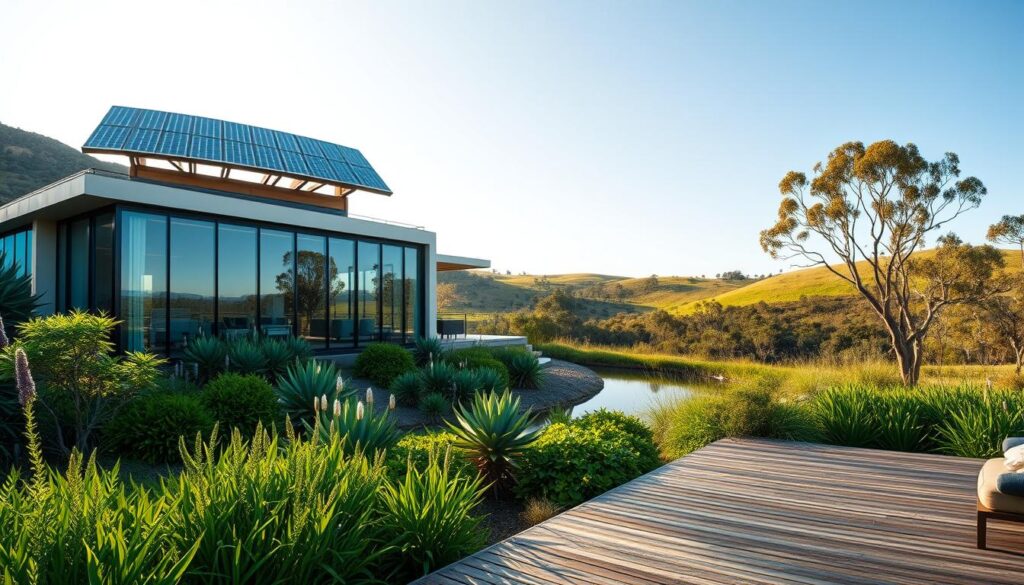
Sydney boasts some of the most advanced modular home builders in the nation. Companies like Prebuilt, Modscape, and ArchiBlox are at the forefront of sustainable building. They create homes that are both eco-friendly and stylish, fitting Sydney's climate and lifestyle.
These builders employ the latest techniques to craft homes that are both green and visually appealing. For example, Modscape's homes are built to save energy, with solar panels and top-notch insulation.
Sustainable projects are thriving across Australia, each tailored to its environment. In Queensland, homes are built with large overhangs and natural ventilation to fight the heat. In Victoria, homes are designed for energy efficiency and insulation to handle cold winters.
In South Australia, homes often feature water-saving tech and drought-resistant gardens. These examples show how different areas are tackling their environmental challenges while staying green.
Modern Australian architecture is blending eco-innovation in exciting ways. Architects are designing homes that reduce environmental impact and adapt to the Australian landscape and climate. They use sustainable materials, energy-efficient designs, and new technologies.
For instance, some homes focus on passive solar design, using natural light and heat. Others have green roofs and walls for better insulation and to support local wildlife.
Adopting eco-friendly prefab homes in Australia comes with many challenges. These include regulatory, financial, and perceptual hurdles. Understanding these complexities is key to making energy-efficient modular homes a common choice in Australian homes.
Australia's building rules vary greatly from state to state and even within local councils. For example, New South Wales has its own set of regulations under the Building Code of Australia. Prefab builders must follow these rules. It's important to know these regulations well and work closely with local authorities to meet sustainability goals.
Prefab homes have long been seen as temporary or low-quality. But today's energy-efficient modular homes are different. They are durable, look great, and are good for the environment. It's important to educate people about the quality and lasting nature of modern prefab homes. This can be done by showing off successful projects and getting feedback from happy homeowners.
Finding money for eco-friendly prefab homes can be tough. This is because not everyone understands their value. But, there are specialised green loan products and government incentives for energy-efficient homes. Some banks are starting to support prefab and sustainable building. Homeowners should look into these options and talk to financial advisors who get eco-friendly construction.
Looking to the future, Australia's construction industry is set for a big change. New trends aim to cut down on environmental harm while making buildings better and more efficient.
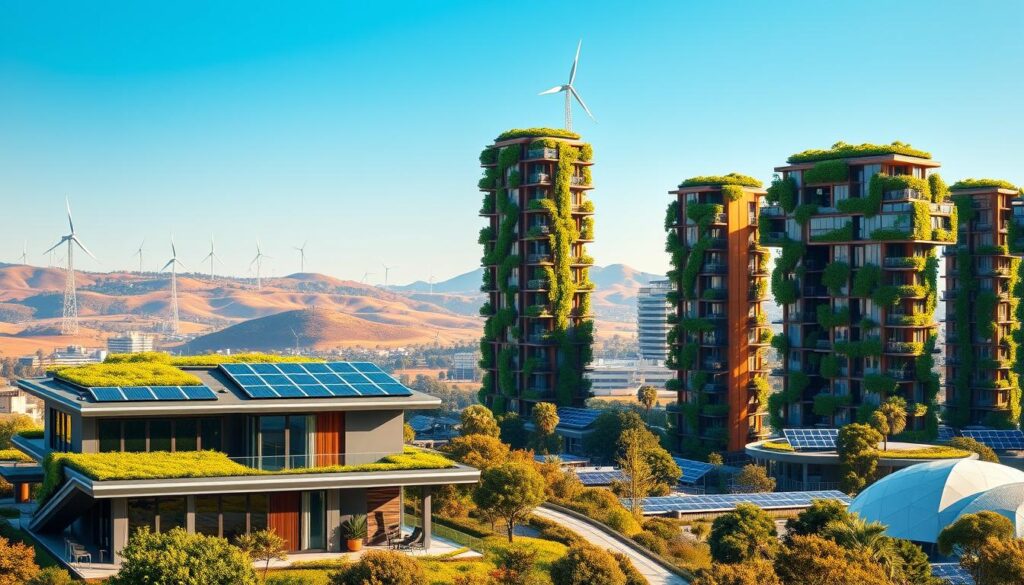
Australia's special environment is pushing for new materials and building methods. For example, mass timber construction is becoming popular because it's good for the planet and looks great. Also, rammed earth techniques are being used to build strong, energy-saving homes.
| Material/Technique | Environmental Benefit | Australian Application |
|---|---|---|
| Mass Timber Construction | Low carbon footprint | Using locally-sourced timber |
| Rammed Earth Techniques | Thermal efficiency | Adapted for different soil types |
| Recycled Materials | Reduces waste | Increasingly used in building projects |
The Australian government is helping make buildings greener. They're updating building codes, giving incentives for green buildings, and setting targets for the industry.
In the next ten years, sustainable homes in Australia will keep getting better. We expect to see more renewable energy systems, better water management, and sustainable community designs that focus on the environment and people's well-being.
Looking ahead, we see a bright future for sustainable living in Australia. Modern homes that are both stylish and eco-friendly are leading the way. Prefab homes that are good for the planet are becoming more popular.
These homes cut down on carbon emissions during building and save money on energy costs over time. They're not just good for the environment; they also look great and work well.
Changing to more eco-friendly homes is a team effort. We need to make smart choices, support new ideas, and push for better laws. Every step we take towards sustainability helps Australia's future.
We urge you to think about making your home more sustainable. Choosing eco-friendly homes is a way to protect our environment for future generations.
Accredited & Certified


 NSW Builder LicenceNo. 282297C
 HIA Member591826