Last summer, the heatwave hit hard and your aircon struggled. Dave in Brisbane had had enough. He added insulation, solar panels, and cross-ventilation to his home.
Dave's story is becoming common. Homeowners and developers across Australia are adopting smarter building methods. Our harsh climate is driving this innovation.
People are changing how they view homes and workplaces. Eco-friendly designs are now seen as smart and cost-effective. They save on energy and boost property values.
By 2030, this trend will grow fast. Australia is set to lead in green construction in the Asia-Pacific. Our buildings will be brighter, smarter, and more sustainable.
The state of sustainable building in Australia is a mix of good and bad. We've made great strides, but there's more to do. We're not yet where we want to be.
Green building certifications are getting more common in big cities. Green Star ratings cover over 28% of commercial office space in Sydney, Melbourne, and Brisbane. The NABERS energy rating system is now expected for big commercial buildings, especially in the corporate world.
Basic sustainability features are now standard in new buildings. Most new projects include:
The rules for building have gotten stricter in recent years. Building codes now require higher energy efficiency. Many local councils also have stricter sustainability rules. But, how well these rules are followed varies a lot.
A lot of Australian homeowners now care about sustainability. Surveys show 68% of people looking to buy a home want sustainable features. Developers are starting to offer these features, but at a higher cost.
But, there are still big challenges. The cost of sustainable features is still a barrier for some. There's also a lack of skilled workers to use new sustainable technologies.
There are some bright spots to celebrate:
This situation gives us a good starting point to see how we'll do in the future. We're building on growing awareness, better rules, and more demand for green options. The push towards a greener construction future in Australia is gaining speed.
Australia faces unique environmental challenges. Sustainable building is now a must for our future. We see severe bushfires, droughts, and extreme heat that threaten our homes and way of life.
These climate impacts change how we design and build. Sustainable design helps create structures that withstand bushfires, manage water, and keep cool during heatwaves. Architects and builders are adapting to our Australian conditions.
Australians now prefer eco-friendly homes. They look for better energy efficiency, water conservation, and healthier indoor environments. This demand drives innovation in our construction industry.
The economic benefits of sustainable buildings grow every year. Green buildings save a lot of energy through insulation, solar power, and smart tech. They also increase property values by reducing living costs.
Australia's climate commitments highlight the importance of sustainable construction. We've pledged to reduce emissions and move to cleaner energy. The building sector is key to achieving these targets through better standards.
Every Australian benefits from sustainable building practices. Whether building a new home, renovating, or reducing your footprint, understanding sustainable principles is crucial. It helps create better living spaces for all.
| Aspect | Traditional Building | Sustainable Building |
|---|---|---|
| Energy Consumption | High ongoing costs | Reduced through design |
| Water Usage | Standard fixtures | Efficient systems |
| Indoor Air Quality | Variable | Consistently healthier |
| Long-term Value | Standard appreciation | Enhanced resale value |
| Environmental Impact | Higher carbon footprint | Reduced emissions |
This comparison shows why sustainable building is a big step forward for Australian homes. Following a sustainable living guide helps homeowners make choices that save money and protect the environment.
We're seeing a big change in how Australians view their homes. Sustainable building shows our understanding that well-designed homes make healthier communities and a more resilient nation.
Australia's construction scene is changing fast with new, green materials leading the way. These materials are not only good for the planet but also changing how we design and build buildings. This is especially true in our diverse climate zones.
Cross-laminated timber (CLT) is changing Australian building with its green benefits. It captures carbon while growing, making buildings carbon sinks. This is a big step forward.
Australian makers like XLam Australia and Timberlink are making more CLT to meet demand. It's strong, yet lighter than old materials. This means less foundation work and lower transport emissions.
Big projects like the International House Sydney show CLT's big potential. It looks great and doesn't need extra finishes, making spaces feel warmer and more welcoming.
Recycled steel and concrete are becoming popular for green building in Australia. New ways to process them keep them strong while cutting down carbon.
Companies like Bluescope Steel are leading with new recycling methods. Their tech uses almost all recycled content, keeping steel strong and durable.
Recycled concrete is also making a difference. The Alex Fraser Group turns old concrete into new, high-quality materials. This saves resources and cuts down on landfill waste.
| Material Type | Carbon Reduction | Australian Suppliers | Key Applications |
|---|---|---|---|
| Recycled Steel | Up to 58% less embodied carbon | Bluescope, InfraBuild | Structural frames, roofing |
| Recycled Concrete | 65% lower carbon footprint | Alex Fraser, Boral | Road base, structural concrete |
| CLT Panels | Carbon negative during growth | XLam, Timberlink | Walls, floors, entire structures |
| Bio-based Insulation | 50-75% less embodied energy | Hempcrete Australia, Earthwool | Wall cavities, roofing insulation |
Bio-based insulation is becoming more popular for its good thermal performance and low environmental impact. Australian innovators are creating solutions that fit our climate perfectly.
Hemp-based insulation from Hempcrete Australia is great at controlling moisture and resisting fire. Sheep's wool insulation keeps temperatures natural and is fully renewable and biodegradable.
Even recycled denim is being used as insulation. It often beats synthetic materials in keeping warm or cool, and is safer to handle and install.
These materials are especially useful in Australia's different climates. They help keep buildings comfortable all year, cutting down on heating and cooling needs.
By using these green materials, we're not just building structures. We're creating healthier spaces that work well with Australia's natural world.
Smart technology is changing Australia's green construction scene. It's making buildings smarter, adapting to the environment and user needs. This is happening in cities like Sydney and Melbourne.
Australian construction now uses advanced systems that learn and adapt. These systems improve performance in real time. This is the future of sustainable building in our cities.
Today's Australian buildings have advanced management systems. These systems control lighting, HVAC, security, and energy. They work together as one smart network.
These systems talk to each other in amazing ways. For example, if a room gets too much sunlight, the system adjusts the blinds. This reduces the need for artificial light.
Many iconic Australian buildings use this technology. They save a lot of energy and make spaces more comfortable for people.
Artificial intelligence is taking building efficiency to new heights in Australia. These systems study how people use spaces. They learn patterns in usage.
They figure out when areas need heating, cooling, or lighting. Then, they create schedules that save energy while keeping spaces comfortable.
These systems get better over time. They adapt to changing usage patterns thanks to machine learning.
Water management is a big challenge in Australia's climate. Smart recycling systems offer solutions for green construction projects.
These systems can handle greywater and blackwater differently. They monitor water quality constantly. This ensures safety and efficiency.
In droughts, these systems are very useful. They help buildings use less mains water while still operating.
| Technology Type | Key Benefits | Australian Adoption | Energy Savings |
|---|---|---|---|
| Building Management Systems | Centralised control, real-time optimisation | High in commercial buildings | 15-25% reduction |
| AI Energy Solutions | Predictive adjustment, learning capability | Growing in premium projects | 20-30% reduction |
| Smart Water Recycling | Adaptive treatment, quality monitoring | Strong in drought areas | 40-60% water saving |
These smart technologies are making big strides in Australian green construction. They show how digital innovation and sustainable building can work together.
More projects are using these solutions every year. This creates buildings that are not just green but also intelligent and responsive.
Australia's building scene is changing fast, thanks to prefabrication. Factories are now taking over traditional building sites. They deliver high-quality buildings quickly and efficiently.
New South Wales and Victoria are leading in sustainable prefab innovations. Companies like Modscape in Victoria and Prebuilt in NSW are making eco-friendly buildings.
These prefabricated modular builders Sydney and Melbourne-based experts cut down construction waste by up to 80%. They do this by making buildings in factories and using materials wisely.
This method ensures buildings are of high quality. It also makes construction faster. Projects that used to take months now finish in weeks, with less disruption.
The modular housing sustainability benefits go beyond just reducing waste. Factory-made homes have better insulation, which means they use less energy.
They also have:
One big plus is that these buildings can be moved or changed. This makes them last longer and use less materials over time.
The portable modular housing future looks bright. We're heading towards homes that can change with our needs or move with us.
This could solve Australia's housing problems. Portable homes can be temporary after disasters or permanent in busy areas.
New tech will make these homes even better. We'll see homes that are lighter, easier to build, and still good for the environment.
By embracing prefabrication, we're not just building homes. We're creating homes that are sustainable and can adapt to Australia's future.
Australia's construction industry is making big strides toward energy efficiency and net zero targets. We're seeing exciting changes in residential and commercial projects all over the country. These changes are changing how we think about building performance and sustainability.
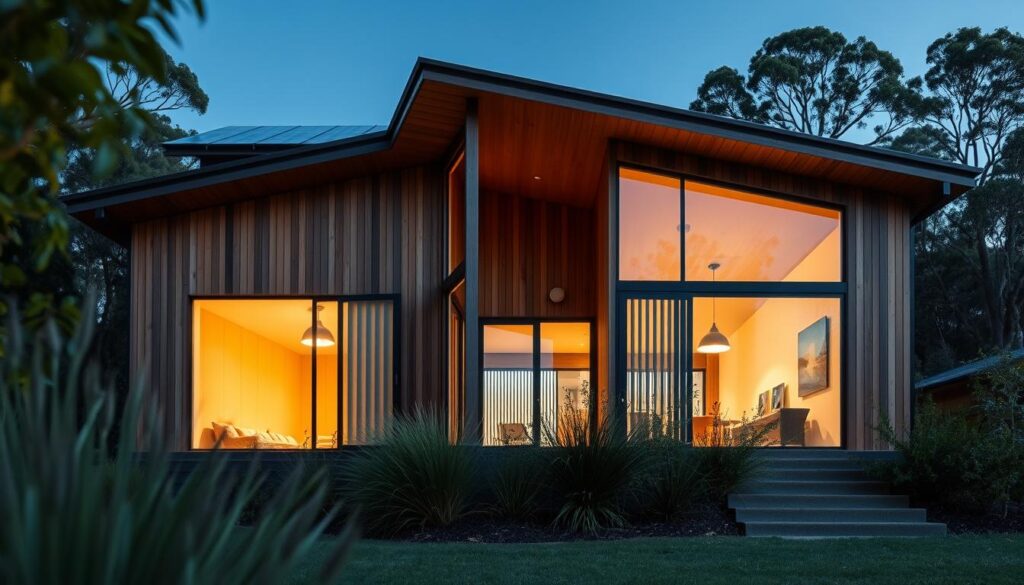
Our journey toward net zero energy buildings combines cutting-edge technology with smart design principles. Let's explore how these approaches are transforming Australian construction practices.
Passive House principles have found a perfect home in Australia with some clever local adaptations. The original European standards have been modified to suit our diverse climate zones. From tropical north to temperate south, these designs work with our environment rather than against it.
Key Australian adaptations include:
These modifications ensure Passive House designs deliver maximum comfort while minimizing energy consumption. The results speak for themselves in reduced heating and cooling costs.
Solar integration has become a cornerstone of Australian energy efficiency. Modern building designs now incorporate solar panels as standard features rather than afterthoughts. The real game-changer has been the marriage of solar with advanced battery storage systems.
"The integration of solar and battery storage represents the most significant advancement in residential energy management we've seen in decades."
Today's systems offer smarter energy management through:
These technologies are becoming more affordable and efficient each year. They're helping Australian households achieve greater energy independence.
The National Construction Code continues to raise the bar for thermal performance standards. These updates push the industry toward better energy outcomes across all building types. The latest standards focus on holistic building performance rather than individual components.
Recent improvements in the Code include:
These standards ensure new buildings perform well in both summer and winter conditions. They represent a significant step forward in our national energy efficiency goals.
| Building Type | Energy Rating Improvement | Annual Energy Savings | CO2 Reduction |
|---|---|---|---|
| Residential Homes | 6.1 to 7.3 stars | 42% | 3.2 tonnes |
| Office Buildings | 4.8 to 6.5 NABERS | 38% | 28 tonnes |
| Retail Spaces | 5.2 to 6.8 NABERS | 35% | 19 tonnes |
| Educational Facilities | 5.6 to 7.1 stars | 45% | 36 tonnes |
Australian case studies demonstrate what's possible with focused energy efficiency efforts. The Nightingale Housing project in Melbourne achieved remarkable results through Passive House principles. Their development shows 80% reduced energy consumption compared to conventional apartments.
Another standout example comes from Sydney's Central Park development. Their integrated energy system combines solar power, trigeneration, and water recycling. This approach has set new benchmarks for sustainable urban development in Australia.
These projects prove that energy efficiency and comfort can go hand in hand. They're paving the way for Australia's net zero future in the built environment.
Australia's climate is always changing, making smart water use a must. Droughts are more common, so saving water is key for a sustainable home. We'll look at ways to keep your home water-efficient and beautiful.
Greywater systems use water from showers, baths, and laundry for gardens. They can cut outdoor water use by up to 50%. This is great during water restrictions.
It's important to know the rules about greywater systems in your area. Each state has its own rules for installation and water quality. You'll need a pro to install and regular checks to keep it working right.
When using greywater, plan your garden irrigation carefully. Drip systems are best as they save water by delivering it directly to roots. But, don't use greywater on food plants unless it's been treated well.
| System Type | Treatment Level | Best For | Approximate Cost |
|---|---|---|---|
| Diversion Systems | Basic filtration | Established gardens | $500-$1,500 |
| Sand Filter Systems | Intermediate treatment | Larger properties | $2,000-$4,000 |
| Membrane Bioreactors | Advanced treatment | Vegetable gardens | $5,000-$8,000 |
There's more to saving water than just low-flow showerheads. Modern fixtures can track your water use and alert you to leaks. Water-efficient fixtures use 40-60% less water without losing quality.
Native plants are perfect for saving water. They need less water than non-native plants. When planning your garden, group plants by water needs and improve soil to keep water in.
Smart irrigation systems adjust watering based on weather. They can save another 20-30% of water. Pair these systems with native plants for the best results.
Effective water management uses many strategies. Start with efficient fixtures, add greywater systems, and finish with drought-resistant plants. This approach makes homes more water-friendly, saves money, and helps the environment.
New South Wales is at the forefront of sustainable building in Australia. It sets high standards that encourage other states to follow. Across the country, we're seeing more eco-friendly construction projects.
The Green Star Communities rating is Australia's top system for sustainable neighborhoods. It looks at the whole area, not just buildings. It checks on the environment, economy, and social aspects.
In NSW, Central Park in Sydney is a great example. It got a 6-star Green Star Communities rating. It uses water recycling, renewable energy, and has great public transport. Melbourne's Docklands and Perth's Elizabeth Quay are also leading the way.
These areas show how planning can help the environment. They also make neighborhoods healthier and more connected. This improves life for everyone and boosts the local economy.
Australian architects are using biophilic design to connect people with nature. This fits well with our climate and love for the outdoors. It makes buildings feel new and Australian.
They use natural ventilation, daylight, and blend indoor and outdoor spaces. In NSW, you'll find native plants, green walls, and water features. These add beauty and cool the area.
The One Central Park in Sydney is a great example. It has vertical gardens that clean the air and connect people with nature. Queensland and Western Australia are also using similar designs.
Renewable energy projects are changing how Australians get clean power. They let many properties share energy through solar gardens and microgrids.
In NSW, the Haystacks Solar Garden lets people without roofs buy into a solar farm. They get credits on their bills. Victoria and South Australia have similar projects.
These projects make clean energy more accessible. People save money and help the environment. It's a win-win for everyone.
As these projects grow, we see more teamwork. Local governments, energy companies, and communities are working together. This helps Australia move towards renewable energy and strengthens community bonds.
In Australian construction, the circular economy is becoming a reality. It's about smarter resource use. This way, we build better, cut down on environmental harm, and save money. The industry is seeing big changes as circular ideas take hold.
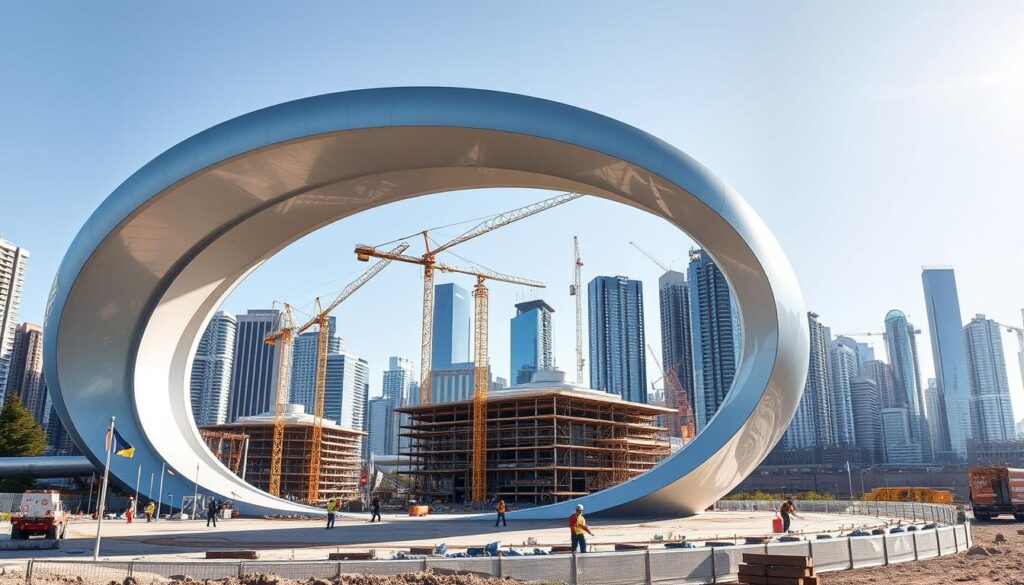
Design for disassembly means making buildings easy to take apart later. It uses simple parts and connections. Architects in Australia now think about what happens at the end of a building's life from the start.
Key principles we're using include:
This way, buildings can be adapted, fixed, or taken apart efficiently. It leads to less waste and more value when buildings are no longer needed.
Australian construction sites are getting better at managing waste. We're seeing great results from our waste reduction efforts. These efforts save money and protect our environment.
Effective waste reduction methods include:
Many Australian projects now divert over 90% of waste from landfill. This is a big step forward in our sustainability journey.
Material passports and tracking systems are changing how we manage building resources. These digital tools track what materials are in a structure and their potential reuse. Australian companies are at the forefront of this innovation.
Modern tracking systems offer:
These systems help create a circular material flow. Buildings become material banks for future projects, not waste streams.
The circular economy is a big change in Australian construction. We're moving from using resources once and then throwing them away to using them over and over. This is good for our environment and our economy.
Australia's building scene is changing thanks to strong government policies. These efforts open up new chances for those who choose green building.
The National Construction Code is making buildings better across Australia. It's updated to focus on energy, water, and making buildings easier to use.
Now, buildings need better insulation and efficient heating. Water use is also being cut with smarter fixtures and rainwater systems. These changes help the environment and save money in the long run.
States are offering great incentives for green building. These programs help make eco-friendly projects more affordable, no matter the size.
Some of the best incentives include:
New rules for tracking carbon emissions are changing how we measure building impact. They cover the carbon in materials and the energy used by buildings.
Builders must now count the carbon in materials like concrete and steel. They also track energy use to find ways to save. This approach helps make better choices in building design and use.
These government efforts together support architectural eco innovations. Knowing these rules helps projects do well for the planet and the wallet.
Australia's buildings are getting a high-tech makeover. They're not just green; they're making the environment better. These new designs use smart tech and old wisdom to fight climate change.
The Living Building Challenge is the top standard in green building. Australian projects aim to be like plants, making their own water and energy. They also make their surroundings better.
These buildings do more than just save energy. They make more energy than they use. They also use more water than they need. This shows how buildings can help local wildlife.
Australian architects are making buildings that change with the weather. They use movable shades and adjustable insulation. This keeps the building cool or warm, depending on the day.
They also use special cooling methods for hot summers. These include:
These ideas cut down on air conditioning by up to 70%. This makes buildings comfy and saves energy.
A big change in Australian architecture is using Indigenous knowledge. First Nations people have deep knowledge of sustainable living and the seasons.
Architects and Traditional Owners are working together. They're designing buildings that:
This approach makes buildings that are good for the planet and respect local culture. It connects buildings to the land in a special way.
These green building ideas show Australia's future. They're buildings that give back, adapt to the climate, and respect the land's history.
Our journey through sustainable construction trends shows a clear path ahead. We're using renewable materials, smart tech, and energy-saving designs. These changes are making Australia's buildings better.
Homeowners, developers, and policymakers are all key players. Going green saves money and helps the environment. It also makes our homes healthier and more comfy.
Australia can be a leader in green building. We're moving towards net zero homes and circular economy ideas. Our future looks bright as we build communities that are good for people and the planet.
We urge everyone in construction to join these trends. Together, we can make Australia sustainable and resilient by 2030.