Australians know how vital it is to live sustainably. With energy costs going up and climate change worries, we're looking for ways to lessen our impact. Modular construction is leading the way, changing how we build and live in sustainable homes.
We're excited to share the latest on energy-saving design tips for modular homes. These homes are not just good for the planet but also save money. By using modular innovation and smart solutions, we can build a greener future.
Australia is seeing a big change in housing, thanks to modular construction. This change is important because of climate change. Modular homes are becoming more popular because they are good for the environment and save resources.
Modular homes have many benefits. They make less waste, use less energy, and are more efficient. In Sydney, people are choosing prefabricated homes because they want to live sustainably without giving up style or quality.
We love modular construction because it's the future of homes in Australia. It's built in a factory, so it's better quality and more energy-efficient. This makes it great for those who want to help the planet.
Modular homes also mean less waste and better energy use. This fits perfectly with our goal of being eco-friendly. We're making a big difference in the industry by choosing this method.
We want to make homes that are good for the planet and look great. We think everyone should be able to live sustainably. Our modular homes are designed to be both green and beautiful.
We're changing how people see prefabricated homes. We're using new designs and green practices. Our aim is to make sustainable living common in Australia, and we're leading the way.
In Australia, insulation is key for energy-efficient homes. It keeps the climate inside comfortable, no matter the outside weather. We design homes that work well with the local environment.
Effective insulation is the backbone of our energy-efficient modular home designs. It cuts down on the need for heating and cooling. This lowers energy use and carbon footprint. Australia's climate varies, so insulation must match each area's needs.
Australia's climate is vast and varied. We don't use the same insulation everywhere. Instead, we tailor it to each region's specific needs.
In Northern Australia, high heat and humidity are common. Our insulation uses reflective barriers and better ventilation. Reflective insulation keeps homes cool, and ventilation helps get rid of heat.
Southern Australia needs insulation for cold weather. We use insulation with high R-values and draft prevention. This keeps homes warm and energy-efficient in winter.
We pick insulation materials for their performance and eco-friendliness. Our top choices are recycled polyester, wool, and rigid foam. Recycled polyester insulation is eco-friendly and effective. Wool keeps temperatures natural, and rigid foam is durable and high R-value.
"The right insulation can make all the difference in maintaining a comfortable home temperature year-round, reducing the need for heating and cooling."
Thermal bridges can harm energy efficiency in prefab homes. We solve this by making insulation envelopes around the home. Our factory setup ensures precise insulation, with no gaps.
Our homes are energy-efficient, comfortable, and sustainable. Our insulation strategy is key to our eco-friendly housing in Australia.
Passive solar design is key in our green architectural solutions for modular homes in Australia. It helps us make homes that are good for the environment and comfortable to live in.
We think about how the sun and local climate affect our homes. This way, we use less energy for heating and cooling. Our homes become more sustainable and comfortable.
Getting the right orientation for our homes is very important. We position them to catch the sun's rays in winter and block them in summer. This makes our homes more energy-efficient.
In cities like Sydney and Brisbane, we face homes south to north. This lets in natural air and cuts down on air conditioning needs. In Melbourne, we orient homes more to the north to catch winter sun.
| City | Optimal Orientation | Design Consideration |
|---|---|---|
| Sydney | North-South | Cross-ventilation, shading devices |
| Melbourne | Northerly | Winter sun capture, insulation |
| Brisbane | North-South | Cross-ventilation, roof overhangs |
We focus on cross-ventilation in our designs. We place windows and doors to let air flow through. This cuts down on the need for air conditioning.
Our cross-ventilation strategies keep homes cool without using a lot of energy. This makes living better and helps the planet.
Adding enough thermal mass to lightweight homes is a challenge. We use concrete floors and special materials to store heat. This keeps the temperature stable.
This method means we use less energy for heating and cooling. Our homes are both comfy and eco-friendly.
We're dedicated to making solar power a key part of our modular homes. This reduces our need for non-renewable energy. We start by designing our homes to be energy-efficient from the ground up.
Our solar panel installation is tailored for modular homes. We design roofs to hold the panels and ensure they face the right direction for sunlight.
We focus on roofs that face north to catch the most sunlight. Our designs also support the weight of solar panels and adjust for Australia's varied climates.
We choose panels that handle Australia's heat and hail well. Our selection focuses on durability and performance in our local climate.
We suggest battery systems that match our solar panels. We prefer lithium-ion and flow batteries for their reliability and value in Australian homes.
| Battery Type | Efficiency | Lifespan |
|---|---|---|
| Lithium-ion | 95% | 10-15 years |
| Flow Batteries | 90% | 15-20 years |
We add solar hot water systems to our designs. We place collectors for the best sunlight and include tanks and backup heating when needed.

Using solar power, we build homes that save energy and are good for the planet. Our detailed solar integration makes sure everything works together for the best results.
We're using smart home tech to make energy-saving modular homes. These homes are both green and comfy. This way, we lead in smart home sustainability trends and make homes better for our residents.
Our homes have advanced climate control for Australia's weather. These systems adjust to temperature changes using smart algorithms. They make different zones in the home comfy and save energy.
The perks of our climate control systems are:
Our smart homes track energy use in real-time. Homeowners see how much energy they use. They can change their habits to use less energy. The system also uses solar power when it's available.
| Feature | Benefit |
|---|---|
| Real-time energy monitoring | See energy use right away |
| Automated energy optimization | Save energy and money |
Our homes use their own power first, then the grid. Smart battery systems manage this. They decide when to save or use solar energy. This makes our homes active in energy use.
By mixing smart tech with green energy, we create homes that are good for the planet. Our homes are not just places to live. They're part of a bigger effort to live sustainably and innovate.
We focus on sustainable water management in our modular homes. This helps reduce our environmental impact. Water efficiency is key, as it's vital in Australia where saving water is a big deal.
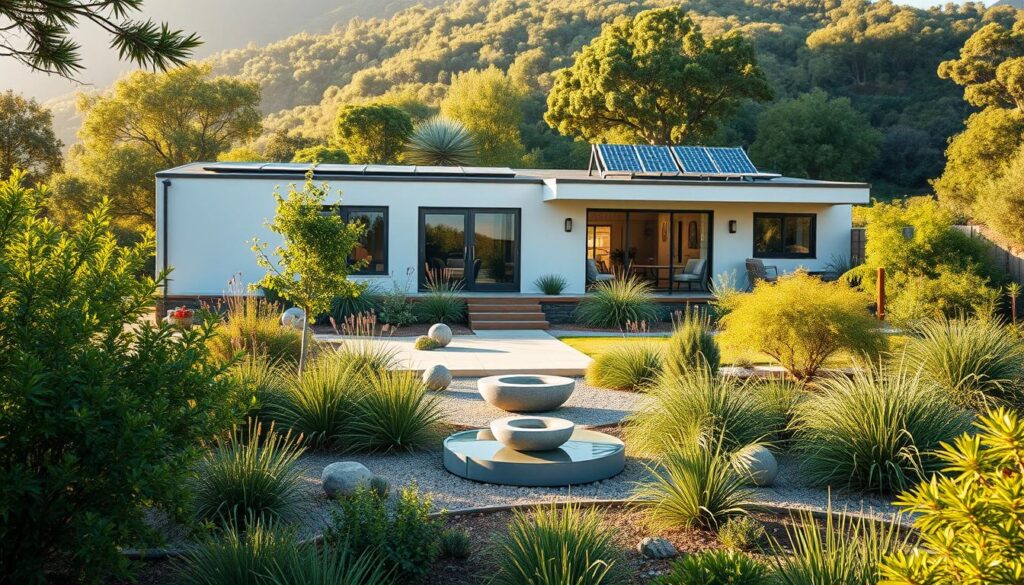
We use many strategies to cut down water waste. We aim to use water wisely and efficiently.
We create rainwater harvesting systems for Australia's changing weather. Our systems fit different areas, from dry to wet. We make sure the tanks are just the right size and look good too.
Our greywater systems clean and reuse water from showers and laundry. This water is used for gardens and toilets. We follow local rules to make sure it's done right. Our systems are built in a factory for better quality.
We pick fixtures and appliances that use less water but work well. We look for WELS ratings to find the best ones. Below is a table showing what we usually choose.
| Fixture/Appliance | WELS Rating | Water Consumption |
|---|---|---|
| Taps | 5-star | 4.5 L/min |
| Showerheads | 4-star | 7.5 L/min |
| Toilets | 5-star | 3.5 L/flush |
Our homes save water, making them more eco-friendly. This is true for our portable eco home options too. It shows how environmental benefits of modular homes are key to us.
We focus on green architectural solutions by choosing sustainable materials. Our goal is to make modular homes that are good for the planet and healthy for those who live in them.
We choose Australian materials for a few key reasons. Using local materials cuts down on carbon emissions from transport. For example, we use sustainably harvested timber from Australian forests. This supports local industries and fits our climate well.
We also prefer locally manufactured steel with high recycled content and regionally sourced stone and earth products. This helps our local economy and reduces our environmental impact.
We love adding recycled and upcycled elements to our designs. This reduces waste and makes our homes unique. For instance, we use reclaimed timber beams for strength and beauty.
We also use recycled glass countertops and other decorative items. This turns waste into something beautiful and functional. It makes our homes sustainable and special for our clients.
We carefully choose non-toxic finishes for our homes. This ensures the air inside is clean. We use low-VOC paints, natural oils and waxes, and formaldehyde-free cabinetry and furniture.
Our factory-controlled environment means these materials are ready for use. This makes our homes healthy from the start. Our focus on these details helps create better living spaces for our clients.
By using Australian materials, recycled elements, and non-toxic finishes, we make homes that are good for the planet. These choices help reduce our environmental impact and make our homes durable and comfortable.
The case for energy-efficient modular homes in Australia is strong. It's about saving money upfront and gaining value over time. These homes offer great financial benefits to homeowners across the country.
At first glance, energy-efficient homes might seem pricey. But, the long-term savings and increased property value make them worth it. We've seen this in our work on sustainable housing solutions.
We've looked closely at many projects. We compared the costs of features like insulation, solar panels, and smart tech to their long-term savings. For example, our energy-efficient home designs in NSW cut energy bills by 40% compared to regular homes.
The time it takes to see a return on these investments varies. It's usually between 5 to 10 years. Plus, these homes often sell for more and attract more buyers, adding to their value.
Australia has many rebates and incentives for eco-friendly homes. As experts in prefabricated homes Sydney, we guide clients through these programs to save money.
Programs like the Small-scale Renewable Energy Scheme and the NSW Energy Savings Scheme offer big financial benefits. We help our clients get these benefits by handling paperwork and applications.
By using these incentives, homeowners can lower the cost of energy-efficient homes. Our team is dedicated to helping clients get the most out of these programs. This way, they can enjoy the full financial benefits of energy-efficient modular homes.
We lead in sustainable housing in Australia, with many energy-efficient modular projects. Our innovative designs and environmental focus have made a big difference. We're proud of our impact on the housing scene.
In cities, we've tackled space and council rules with our modular homes. Our prefabricated homes in Sydney fit well with local areas. They also use less energy than traditional homes.
The Bayside Eco-Development is a standout project. It's a multi-home site with top energy ratings. It uses renewable energy and smart water systems. Homeowners love the energy savings and comfort.
We've turned tight spaces into energy-efficient homes. Our designs bring in lots of natural light and air. They set new standards for living in Melbourne and Sydney.
In the outback, our solar powered prefab homes offer energy freedom. They handle extreme heat well, keeping homes cool with little energy. Our homes have greatly improved life for outback residents.
For coastal areas, we've created homes that stand up to salt and wind. Our designs use coastal breezes for cooling and durable materials. They're sustainable, resilient, and need less upkeep.
Creating eco-friendly modular homes comes with its own set of challenges. We've faced many obstacles in our journey towards sustainable modular housing. These challenges have tested our determination and creativity.
One big challenge was debunking myths about modular homes. Many thought they were of lower quality, less flexible in design, or had poor resale value. But we've shown that our modular homes meet and often exceed expectations in these areas.
We've worked hard to educate people about the environmental benefits of modular homes. For example, our use of prefabricated components reduces waste and boosts energy efficiency. We've also shown that modern modular homes can be highly customizable, with sustainable features that attract eco-conscious buyers.
Dealing with Australian building codes and regulations has been tough. We've had to become experts in meeting energy efficiency standards across different areas. For our portable eco home options, we've worked with regulatory bodies to ensure they meet requirements, no matter where they're placed.
We're excited for the future of sustainable modular living in Australia. We're making homes that save energy and are comfy. This is thanks to advanced insulation, smart design, and renewable energy.
Our drive for sustainable living pushes us to keep improving. We're looking into new tech like mass timber and AI for homes. This helps us reduce our impact on the environment.
We want to make sustainable homes more affordable for everyone. By scaling up and cutting costs, we aim to change how homes are built in Australia. This could make a big difference.
Modular homes are a big step towards a greener, more efficient future. We encourage you to choose sustainable housing options. Together, we can create a better future.